
The purpose of this article is to address port work for the 3.4 996 and 3.4 987 and 3.6 996/997 heads. We field a lot of questions about port work for these heads and they are currently far and away the most common M9X heads we work with. We offer two stages of port work for these heads, Stage 1 & Stage 2. It’s worth noting that the 3.4 987 and 3.6 996/997 heads have identical ports and chamber shapes and use the same valve sizes and valve springs and related components. The only differences in the two versions are intake manifold bolt patterns, AOS openings and oil pump bolt patterns. Going forward I’ll refer the heads in this article as 3.4 and 3.6. If you own a 3.4 987 just keep in mind that the info regarding 3.6 heads applies to your heads.
Before I dive in, a little basic information about these two heads is in order. Both heads come from the factory with well designed ports. The exhaust/intake flow ratios are outstanding and because the exhaust ports are so effective, when it comes to performance upgrades our focus is primarily on the intake side. In the case of the 3.4 heads the ports are actually larger than needed for the valve sizes and the displacement. The 3.6 heads are more appropriately proportioned.
The problematic issues that we see with the ports on both of these heads is related to casting imperfections and the rudimentary factory machine work that transitions the valve seats to the port bowls and STR (Short Turn Radius). The machine work leaves problematic sharp edges, especially on the critical STR. These sharp edges don’t negatively impact dry air flow (on a flowbench) as severely as you might expect. The big problem with them is their tendency to strip fuel out of suspension, especially at higher WOT (Wide Open Throttle) revs when the mixture has the maximum volume of fuel in suspension and mixture speed in the port is at it’s highest. Because these sharp edges are very close to the valve seat fuel drawn out of suspension enters the combustion chamber as liquid which does not react during combustion.
This issue of sharp edges pulling fuel from suspension is magnified when casting core shift causes an undercut at the STR. Dry air will transition around this obstacle rreasonably well but the heavier fuel isn’t as nimble so it falls out of suspension. There is definitely some decrease in dry air flow (we’ve proved this in our flow testing), but it’s not as harmful to performance as the negative effects on wet flow. This is well established in dyno testing.
Another casting issue that impacts wet flow is raised casting flash (we call them boogers) and raised seams that protrude into the airflow. The closer these imperfections are to the valve the more impactful they are.
Because the quality of these castings varies from batch to batch some heads are underachievers while others are overachievers on the flow bench and in use, too.
Now for some info about the two stage levels of port work. Stage 1 port work is confined to the area from valve seats down the valve guides. This is the most critical area for performance (a universal truth about port performance is the closer to the valve the more critical the shape, texture and features of the port). Stage 1 port work blends out the sharp edges left behind by the factory and radiuses the STR. With heads receiving Stage 1 port work, before and after flow testing on underachievers shows a higher % of improvement than before and after with overachievers. Flow testing has also shown that it’s not uncommon for an underachiever after Stage 1 port work to have very similar flow as an unported overachiever.
While all of these heads, under and overachievers, benefit to some degree from Stage 1 port work we don’t always recommend it. We would never recommend pulling the heads for port work on a street car. For street applications this work is best considered only if you have pulled the heads anyway and plan to send them out for service. If you think you might make bolt on performance upgrades then the Stage 1 port work is a worthwhile investment. If you’re happy with the stock performance and the heads are off for reliablitly concerns then no need to bother with porting.
Stage 2 port works builds on the Stage 1 work by continuing from the valve guides out to the manifold flanges. There is very little reshaping in these areas and the focus is blending surface flaws and creating a consistent texure flavorable for maintaining fuel suspension. Stage 2 porting is only warranted if your primary goal is ulitmate WOT (Wide Open Throttle) performance.
I hope this answers your questions about port work on 3.4 996 and 3.4 987 & 3.6 996/997 cylinder heads.
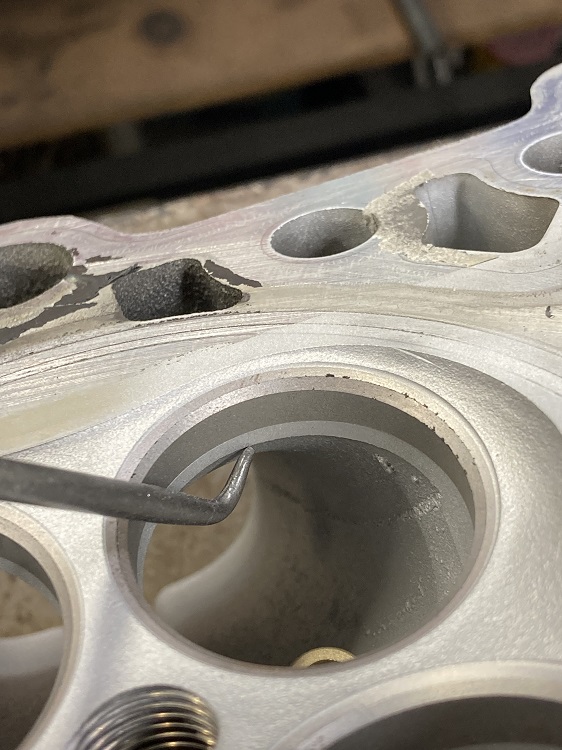
Sharp Undercut Short Turn Radius
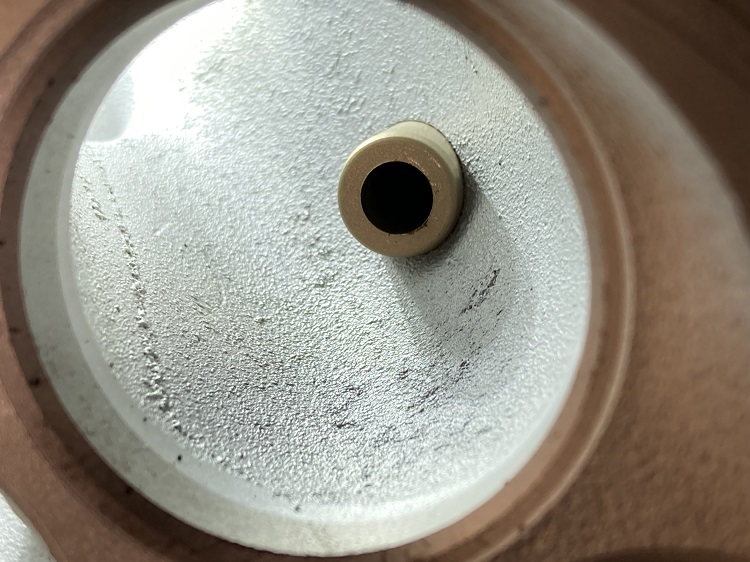
Raised Casting Seam
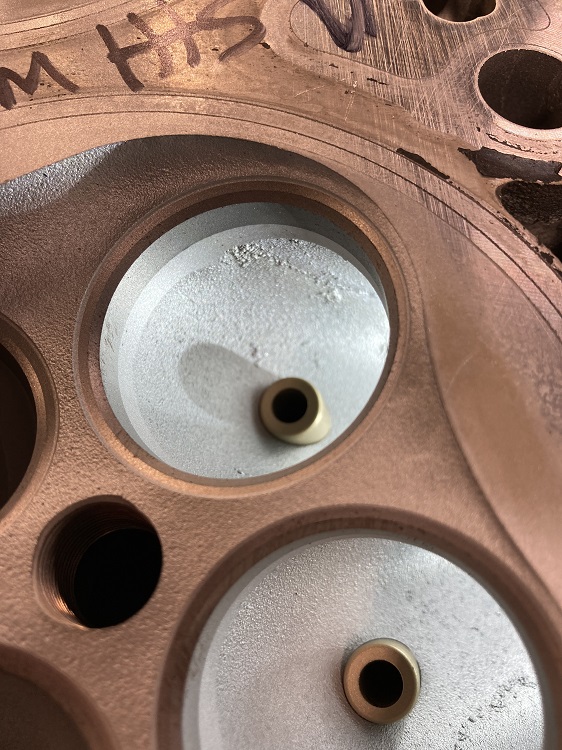
Clusters of Boogers
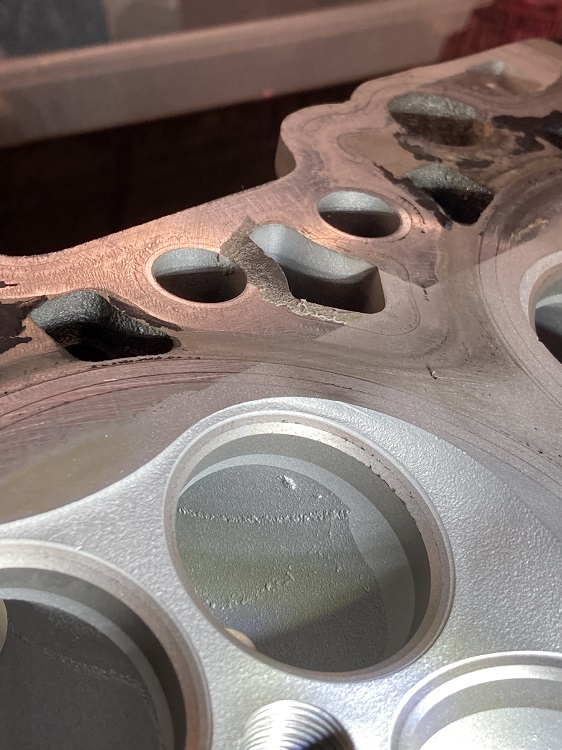
Raised Casting Seam and Big Booger
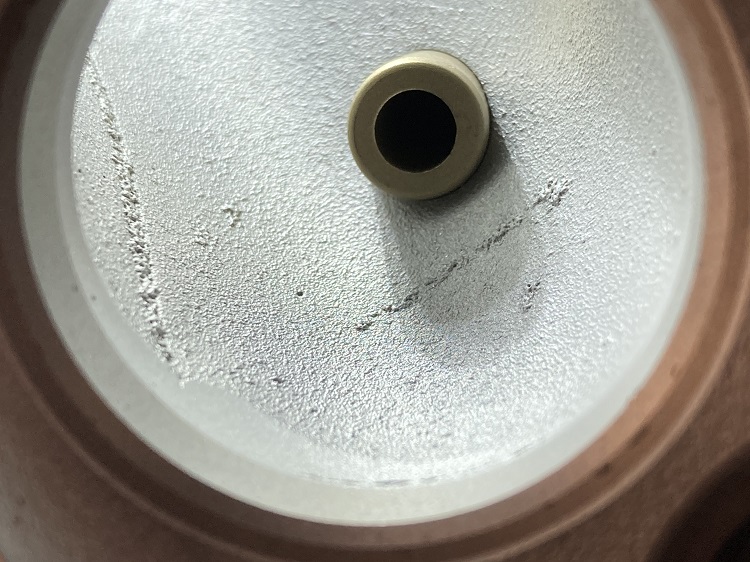
Raised Casting Seam and Large Transverse Booger
 hamheads.com
Thank you !Amazing !Sincerely, Christian van der Bol, OwnerAutohaus Ltd. (est. 1985),147 A Dorcy Dr. (Beside Sprint),P.O. Box 2092,Cayman Islands, KY1-1105.+1 (345) 916 0353
LikeLike